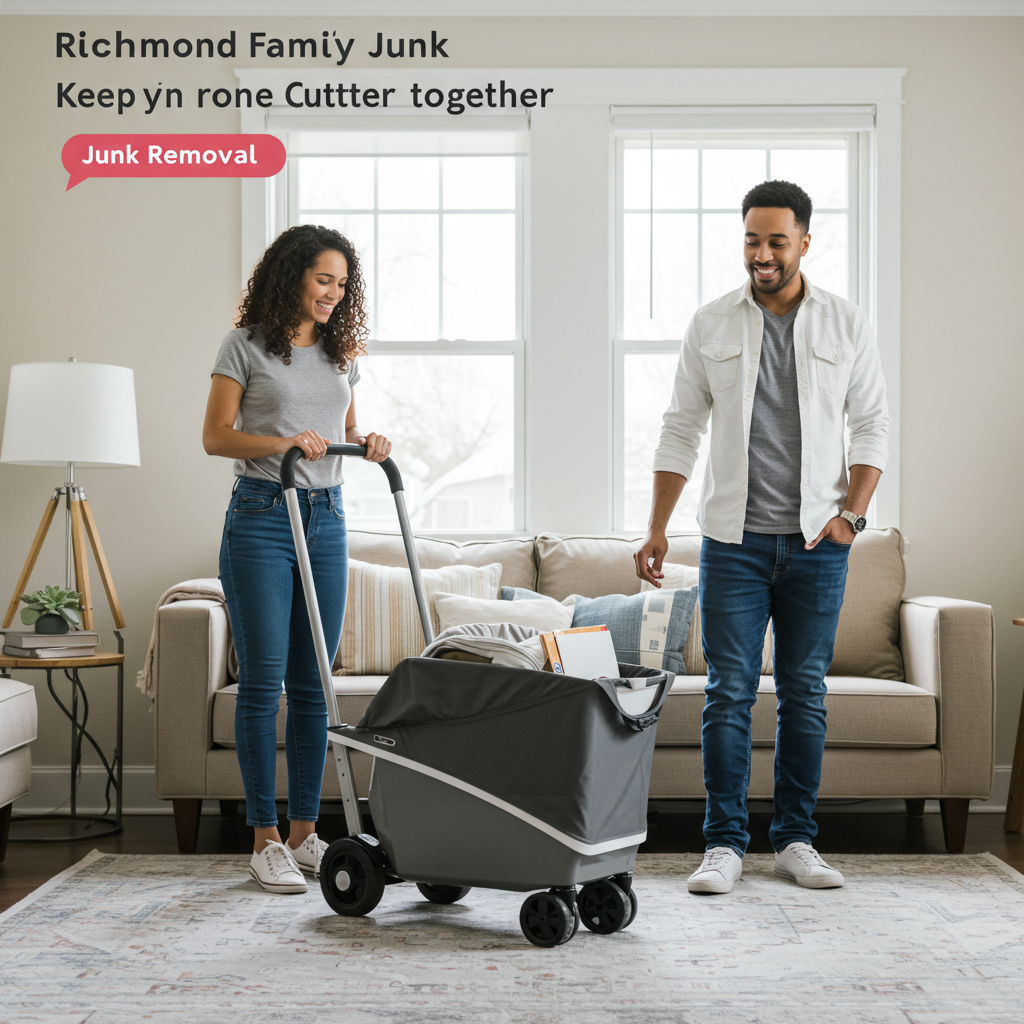
Richmond Family Junk Management: Keep Your Home Clutter-Free Together
Families in Richmond can effectively manage household junk and clutter by establishing clear communication, setting up designated storage zones, teaching children decluttering habits early, regularly reviewing sentimental items, and implementing a consistent 'one-in, one-out' rule to prevent re-accumulation, making the process a shared responsibility.
Living in Richmond often means balancing busy schedules with family life, and it's easy for clutter to accumulate. While individual decluttering guides are helpful, managing junk as a family unit presents unique challenges and requires a collaborative approach. Disagreements over what to keep, overflowing shared spaces, and the sentimental value of various items can make tidying feel like an uphill battle. However, by establishing clear strategies and fostering open communication, Richmond families can transform their homes into clutter-free sanctuaries, promoting peace, organization, and a sense of shared responsibility. This guide provides actionable tips to help your family work together towards a lasting, organized home.
How Can Richmond Families Agree on What's Junk and What Stays?
One of the biggest hurdles in family decluttering is reaching a consensus on what constitutes 'junk' and what holds genuine value. What one family member sees as a treasured keepsake, another might view as unnecessary clutter. Overcoming this requires patience, empathy, and a structured approach to decision-making. Richmond families can create a harmonious decluttering process by:
- Holding Regular Family Meetings: Schedule dedicated 'decluttering discussion' times. These aren't cleaning sessions, but rather opportunities to talk about areas of concern, discuss individual items, and collaboratively set decluttering goals. Ensuring everyone feels heard is crucial.
- Establishing Clear Criteria: Work together to define what makes an item worth keeping. Common questions include: 'Have we used this in the last year?', 'Does it serve a purpose?', 'Does it bring genuine joy or utility?', and 'Is it truly irreplaceable or can it be easily replaced if needed?' For sentimental items, discuss if the memory can be preserved through a photo or digital scan instead of the physical object.
- Creating a 'Maybe' Pile with a Deadline: For items where there's disagreement, create a 'maybe' box. Agree on a specific timeframe (e.g., three months). If no one misses or uses the items by then, they are donated or discarded. This reduces immediate conflict and allows for reflection.
- Respecting Individual vs. Shared Items: Differentiate between personal belongings (which individuals have more say over, within reason) and shared household items. For shared items, decisions should be made collectively. For personal items that encroach on shared space, a compromise may be needed.
- Explaining the 'Why': Help all family members, especially children, understand the benefits of decluttering. Explain how a tidy home reduces stress, saves time looking for things, creates more space for activities, and even contributes to a healthier environment by reducing dust and allergens.
What are the Best Strategies for Organizing Shared Spaces in Richmond Homes?
Shared spaces like living rooms, kitchens, and entryways are often the first to accumulate clutter because they are high-traffic areas used by everyone. Effective organization in these zones requires systems that are easy to use and maintain for all family members. Here are some top strategies for Richmond households:
- Assign a 'Home' for Every Item: This is foundational. Every single item in a shared space should have a designated storage spot. If it doesn't have a home, it's more likely to end up on a countertop or floor. Use labels on bins, shelves, and drawers, especially in playrooms or shared closets, to make it clear where things belong.
- Utilize Vertical Space: In Richmond homes, space can be at a premium. Maximize storage by using shelves, wall-mounted organizers, and multi-tiered trolleys. This gets items off surfaces and floors, making rooms feel larger and cleaner.
- Implement an Entryway Command Center: The entryway is a notorious clutter hotspot. Install hooks for coats and bags, a shoe rack, a mail sorter, and a small bin for keys or loose change. Teaching everyone to deposit their items here immediately prevents migration of clutter into other shared living areas.
- The 'Hot Spot' Attack: Identify areas where clutter naturally congregates – kitchen counters, coffee tables, dining tables. For these spots, dedicate a small, attractive basket or tray. At the end of each day, any items in the 'hot spot' basket are put back in their proper homes. This prevents small piles from becoming mountains.
- Daily 10-Minute Tidy-Up: As a family, dedicate 10-15 minutes each evening to a quick tidy. Everyone contributes by putting away their own items, wiping down surfaces, and resetting shared spaces. Consistency is key to preventing overwhelm.
How Do You Handle Kids' Clutter and Sentimental Items in a Family Setting in Richmond?
Children's belongings and deeply sentimental items pose unique challenges to family decluttering. Kids often have an abundance of toys, artwork, and clothes, while sentimental items, regardless of their practical value, can carry significant emotional weight. Navigating these areas with sensitivity and clear systems is essential for successful, long-term organization.
Managing Kids' Clutter:
- The Toy Rotation System: Instead of having all toys available all the time, rotate them. Store a portion of toys out of sight and bring them back into play periodically. This keeps toys feeling fresh and reduces the amount of visible clutter. When rotating, identify broken or rarely played-with items for donation or disposal.
- Involve Kids in the Process: From a young age, teach children how to sort and put away their toys. Make it a game. As they grow, empower them to make decisions about their belongings. For every new toy, suggest donating an old one.
- Dedicated Storage for Artwork: Rather than displaying every single drawing, create a special
Need Professional Assistance?
Get a free, no-obligation estimate from our expert local team today.